Our website has a fresh new look.

Explore Our Website

eDiscovery

What is eDiscovery?

Key Preparations for Achieving Global Success for Domestic Companies

What is eDiscovery?

The discovery process, foundational to eDiscovery, is a procedure in Anglo-American law where parties disclose evidence and documents before trial to clarify and organize case issues

Through the discovery process, parties in a lawsuit can clarify issues and engage in fair disputes by thoroughly reviewing and holding factual information relevant to the case and sharing evidence and materials on an equal basis. eDiscovery extends this legal procedure by applying it to electronic information, such as emails and databases.

Understanding the significance
of eDiscovery

As patent/trademark infringement cases and other disputes increase, companies seeking international expansion must recognize that eDiscovery is crucial for protecting their assets, especially during cross-border litigation.

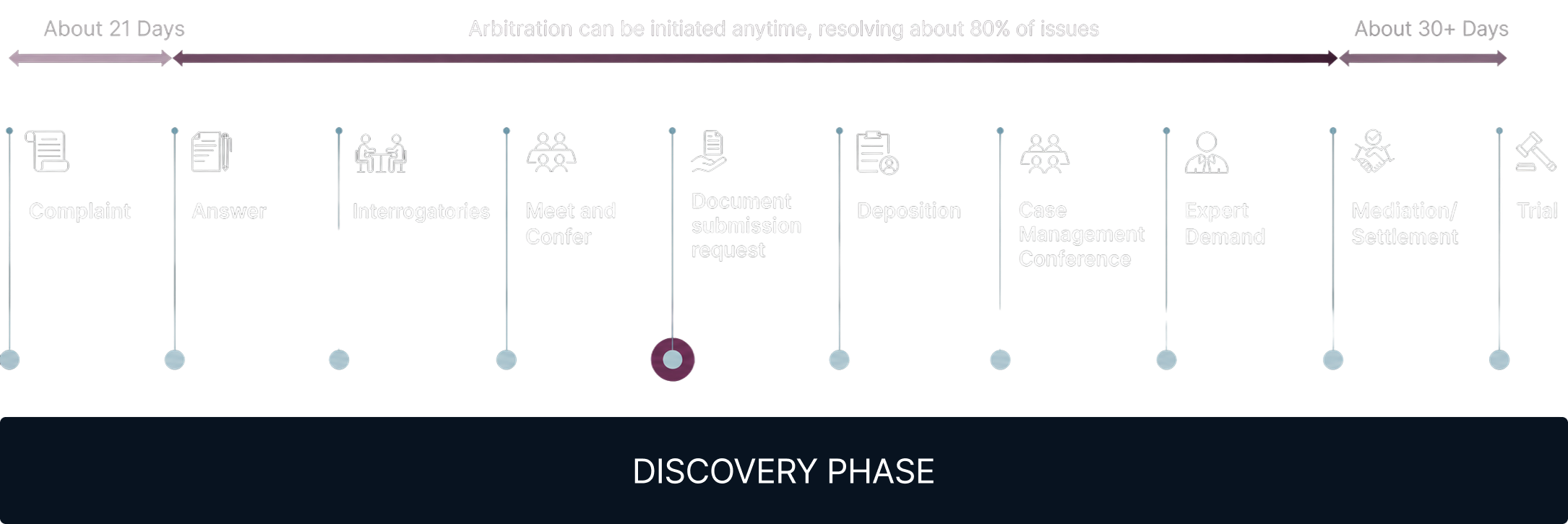
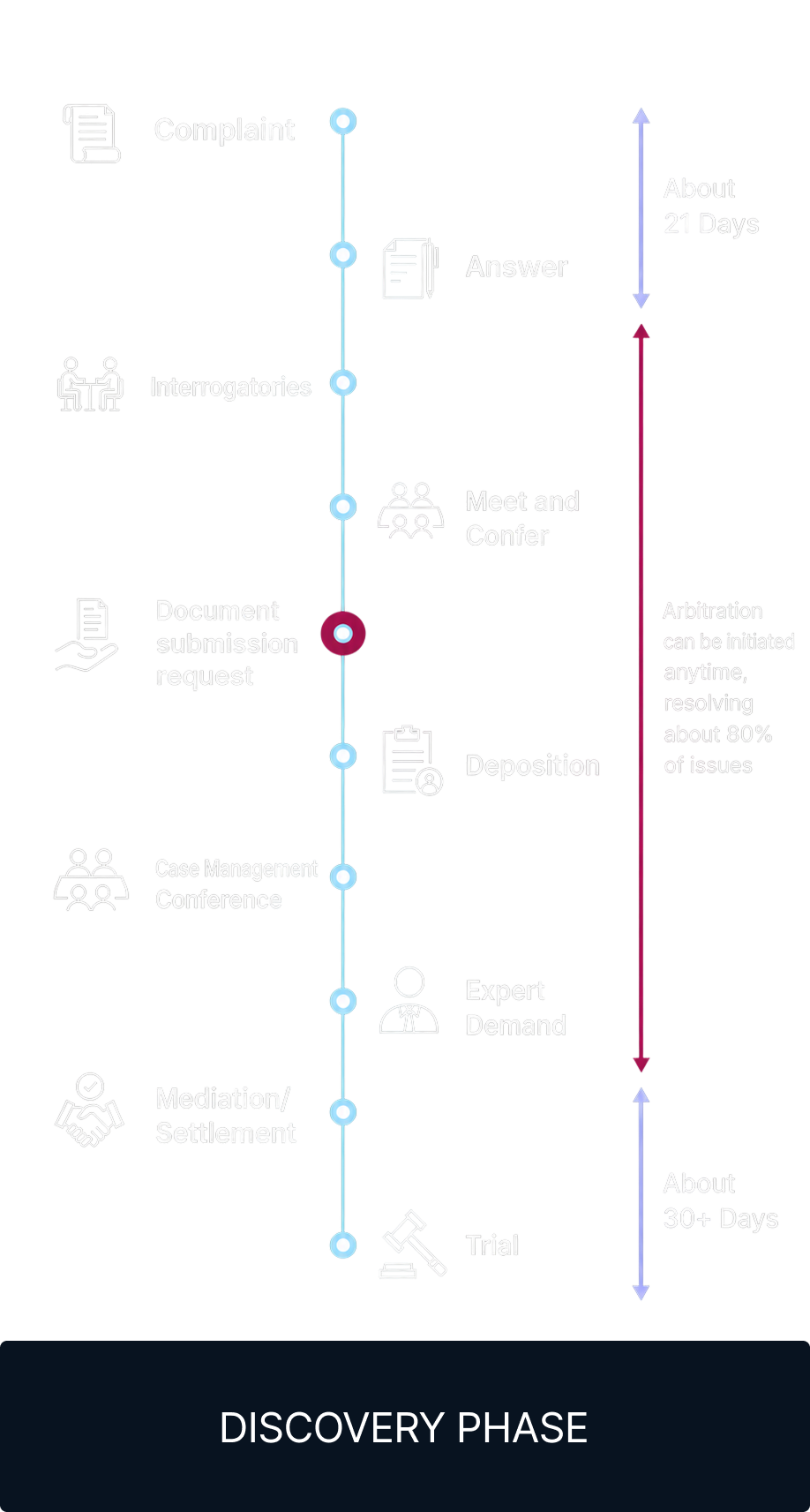
U.S. Civil Litigation Procedure

기계학습의 패턴 인식과 경계 판단

How eDiscovery Works

  1. 01

    Collection

    This procedure involves collecting electronic data storage devices (e.g., PCs, smartphones, USBs) from relevant individuals (custodians).

  2. 02

    Upload, Process and Extract

    The process involves uploading and processing litigation-related documents into an eDiscovery solution, converting them into a searchable format within a single database.

  3. 03

    Search, Find and Review

    The process involves reviewing collected documents to identify those relevant to the case and exclude legally privileged ones.

  4. 04

    Redact, Convert and Produce

    Sensitive information can be redacted from the documents, which are then formatted and submitted to relevant institutions.

Core Values of eDiscovery

Efficiency

Through the discovery process, both parties exchange information and identify baseless claims or defense methods, allowing them to better understand their positions and potential disadvantages if the litigation proceeds. This significantly promotes voluntary dispute resolution at the early stages of the lawsuit.


Fairness

The evidence disclosure system in common law (Anglo-American law) requires parties to exchange relevant information and records based on the principle of mutual good faith. This process alleviates the burden on litigants to independently prove their claims and enables fair debate based on forensically sound data.

Convenience

After the 2006 amendment to the FRCP, the shift from paper-based evidence disclosure to electronically stored information (ESI) made evidence digitalization easier and faster. This change has allowed for quicker data analysis and a clearer understanding of litigation issues.

Precautions for eDiscovery

For companies with limited experience in eDiscovery or international litigation, it is crucial to establish the right strategy from the outset. This helps in understanding the company's current situation, identifying requirements and potential issues in the litigation process, and minimizing associated risks. Above all, it is essential to understand and adhere to the legal requirements, principles, and obligations related to eDiscovery.

Basic Principles of eDiscovery

Integrity

All relevant evidence must be submitted under mutual good faith, ensuring it remains complete and unaltered (without modification, damage, or alteration).

Validity

You may request documents that support the litigating parties' claims and are relevant to the key issues of the case.

Timeliness

Documents required by the court's evidence submission deadline must be provided, or fines and unfavorable judgments may result.

Checkpoints for Preparing
for U.S Litigation

01

Litigation Hold measures are essential

A Litigation Hold is a measure to prevent the deletion or destruction of data during or prior to litigation. Litigating parties have a duty to preserve all relevant data, and implementing a Litigation Hold in advance ensures evidence is maintained, avoiding any potential disadvantages in the litigation process.

02

Access restrictions on important data

Since the data submitted through evidence disclosure typically contains sensitive corporate information and critical technologies, it's crucial to restrict access to and storage of this data to only the necessary personnel during the submission process to the court.

03

Selecting experts suited to the IT environment

IT environments vary significantly based on region, the company’s infrastructure and protocols for security solutions. For lawsuits in U.S. courts, it’s essential to work with experts familiar with each unique IT setup to ensure the most appropriate approach.

04

Understanding the state of data storage

According to FRCP Rule 26(b)(2)(B), even if restoring data is technically difficult or costly, there is an obligation to produce evidence within the agreed scope. It is essential to investigate and determine in advance whether such data can be restored to a usable form.

05

Proactive management of increasing data

The exponential growth of corporate data can significantly burden eDiscovery's evidence preservation obligations. It's important to regularly monitor and manage the types of documents employees create and maintain proper documentation to ensure compliance.

Court sanctions for violating
eDiscovery principles and regulations

Lawsuits and ITC investigations are frequently used to hinder the overseas expansion of a competitor. Many Korean companies, which are unfamiliar with international litigation and eDiscovery rules, often fail to comply, resulting in court sanctions and lawsuit losses. Companies targeting the global market must thoroughly prepare for international litigation and eDiscovery.

Fines

Sanctions imposing punitive fines and penalties for the opposing party's litigation costs

 Objection/Defense Preclusion

Prohibit specific claims or defenses, or restrict the submission of evidence-related matters in court

Default Judgment

If a party is found to have engaged in serious misconduct, the court can rule in favor of the other party without a trial.

Adverse Inference

The judge officially instructs the jury to assume an adverse fact

eDiscovery-Related Sanction Cases

As patent/trademark infringement cases and other disputes increase, companies seeking international expansion must recognize that eDiscovery is crucial for protecting their assets, especially during cross-border litigation.

Complete Evidence Disclosure

In the Green v. Blitz case, the defendant's failure to implement a Legal Hold, coordinate with the IT department, and conduct accurate keyword searches led to inadequate evidence disclosure. The court fined the defendant approximately $300,000 and mandated that all future lawsuits over the next five years include explicit mention of sanctions in court documents.

Duty to Preserve

In 2009, a U.S. federal district court deemed the deletion of relevant emails in a patent infringement case involving a Korean company as evidence spoliation. As a sanction, the court ordered the company to pay legal and court fees. Additionally, the jury was allowed to infer facts contrary to the claims made by the defendant, the Korean company, based on this obstruction of evidence.

Clarification of Issues

In 2009, a U.S. federal district court found that a Korean company's deletion of relevant emails in a patent infringement case amounted to evidence spoliation. The court sanctioned the company by requiring them to cover the opposing party's attorney and trial costs. It also permitted the jury to infer facts against the defendant due to the obstruction of evidence.

Tape Backup

In the Jonson v. Neiman case, the plaintiff asked the defendant to restore emails from 5,880 backup tapes. The defendant argued that doing so would require excessive time and cost, and the tapes might not provide complete results. The court accepted these arguments and excluded the data from submission.

Importance of Agreement

In the UK case of Digicel v. Cable & Wireless PLC, the defendant chose not to restore or submit data from backup tapes without the plaintiff's agreement. The plaintiff sought sanctions, and the UK court ordered the defendant to restore the tapes and disclose additional evidence.

Our eDiscovery expertise
by numbers

700

Cases-to-Date

55TB

Cumulative eDiscovery Data Processed

566

Legal Expert Reviewer Network

4 

Data Center Locations